Halloween Treat Ideas: Sorted by Allergy and Cost
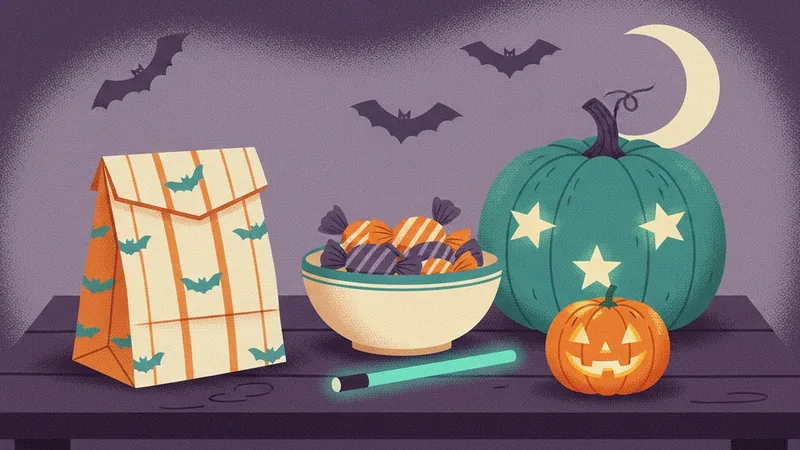
You want treats kids love that fit the budget and are safe for every child. The best Halloween treat ideas mix one candy choice with one non-food choice, so no child is left holding a bag they cannot use.
Halloween treat ideas fall into three groups: wrapped candy, snacks and fruit, and things that are not food at all. Each group suits a different crowd. The eight ideas below say how much each costs per child. They also name the allergy question that comes with each one and say whether it works for a class party. You can pick before you shop.
The National Retail Federation reports that 61% of consumers plan to hand out candy this year. Candy is the default, and it is fine for many doorsteps. This list helps when you want something that works for more children, or something that costs less.
1. Wrapped fun-size candy
Individually wrapped candy is the classic. It is easy to count, easy to store and easy to hand out from a bowl. Cost per child is low to medium, and it depends on the brand and the size of the bag.
The allergy question is real. Allergens vary by brand and by product, and a "fun-size" version can have a different label from the full-size bar. Read the ingredient list on the bag you buy. If you are buying for a class, send the labels along or choose another idea from this list.
Wrapped candy suits a front door, a bowl or a trick-or-treat route. It is not a good fit for a class party unless the teacher has approved the exact candy.
2. Snack packs of pretzels, popcorn or crackers
Small single-serve snack packs cost about the same as candy, and some parents prefer them. They are less sweet and easy to hide in a bag. They still have labels, and wheat, milk and soy are common in snack foods, so read each one.
Snack packs suit a party where children will be hungry at the end, or a bag that goes home in a backpack. Pick one brand per party so every bag is the same.
3. Glow sticks and light-up rings
A glow stick costs less than most candy per child, and children use it that night. It also helps in the dark. The Consumer Product Safety Commission recommends carrying a flashlight or glow stick to help brighten the walkways for trick-or-treaters.
Allergy risk is none, since nothing is food. FARE says a teal pumpkin on your doorstep, or a teal pumpkin sign in your window, means you have non-food treats available such as glow sticks or small toys. Check the age label on the pack, and keep light-up items for children old enough not to chew them.
Use them on a doorstep, on a walking route at dusk, and with any group where you do not know the allergies.
4. Stickers and temporary tattoos
Stickers are the cheapest non-food treat per child. A sheet of Halloween stickers can be cut in strips so one sheet covers several children. Temporary tattoos cost a little more and are a hit with ages 5 and up.
There is no food allergy risk. Ask a parent first about skin before you hand out tattoos at a class party, because some children have sensitive skin.
Stickers work well at a class party, as a bag filler and in a "take one" bowl.
5. Pencils, erasers and small toys
Halloween pencils and erasers cost a little more per child, and a teacher often welcomes them. Small toys such as plastic spider rings or bouncy balls are a step up in price.
Nothing here is food, so allergies are not a concern. Small parts are a concern for children under 3, so check the age label and skip small toys for toddlers.
A teacher, a school-wide bag or a house with many older trick-or-treaters will get the most from these.
6. Clementine pumpkins and banana ghosts
Clementine pumpkins and banana ghosts are easy no-bake Halloween treats for kids. Peel a clementine and press a small green stem into the top to get a pumpkin. Cut a banana in half, stand it up and add raisin eyes for a ghost. They cost little and take about 10 minutes for a dozen.
Fresh fruit is a good swap for candy, though fruit allergies exist, so check your guests. Homemade or cut-up food is not allowed at many schools. If you are making these for a class, ask the teacher first.
Make them for a home party where you know every guest, and make them the same day.
7. A coloring page or mini activity sheet
A folded coloring page or a small activity sheet is food-free, costs only the paper and ink, and keeps a child busy after the party. Pair it with a crayon and it becomes a real treat. Print on plain paper and fold into quarters.
A coloring page also works at a restaurant table or in a long waiting line.
8. A mixed treat bag with a topper
A treat bag lets you combine ideas. Put in one wrapped candy, one sticker and one glow stick, and close the top with a fold-over topper. Each child gets something they can use, and the child with a food allergy can still take the bag if you leave out the candy.
Halloween Treat Bag Toppers are six printable fold-over toppers with front and back art. The back reads the right way up when the topper sits on the bag. Cut, fold and staple, and each fits a bag 4 to 6 inches wide.
For tags tied to a bag handle or a gift, Halloween Treat Tags are 36 round and gift tags with messages such as "Happy Halloween!", "Boo!" and "Thanks for coming". Each has a punch-hole mark.
How to choose Halloween treat ideas by allergy, cost and setting
Start with allergies, because that one can rule an idea out. FARE says food allergies affect one in 13 children, or roughly two in every classroom. Even a small group is likely to include a child who cannot take some candy. A non-food option solves it without a long conversation.
Then look at your budget. The cost column below is a rough tier, not a price. Prices vary by store and by pack size. Check the unit price on the pack and divide by the number of children. The ratings are our own estimates.
| Idea | Cost per child | Allergy question | Class party fit |
|---|---|---|---|
| 1. Wrapped fun-size candy | Low to medium | Read every label | Only if the teacher approves |
| 2. Snack packs | Low to medium | Read every label | Often fine, check the school rules |
| 3. Glow sticks and rings | Low | None | Good, check the age label |
| 4. Stickers and tattoos | Very low to low | None, skin check for tattoos | Very good |
| 5. Pencils, erasers, small toys | Low to medium | None | Very good, skip small parts for toddlers |
| 6. Clementines and banana ghosts | Low | Fruit allergies, fresh only | Ask first, homemade food is often barred |
| 7. Coloring page | Very low | None | Very good |
| 8. Mixed bag with topper | Low to medium | Leave the candy out when needed | Good, with a candy-free version |
How many should you buy? Count the children you expect, multiply by the pieces you plan to give, then add about 20 percent for extra visitors and spills. That buffer is our own rule of thumb, not a measured figure. Buy the non-food items in the same count so every child can pick either.
If you run out, turn off the porch light or put out a sign. Nobody expects a bowl to last all night. Wrapped candy and non-food items keep, so leftovers can go in next week's lunchboxes, a school drive or next year's bowl. Open fruit and homemade treats do not keep, so make only what you will use that day.
The setting decides the rest. On a doorstep, candy plus a bowl of non-food items is the easiest. At a class party, choose non-food items and one approved snack, and check the school's food rules before you buy. At a home party, a mixed bag with a tag gives every guest something to take home.
A treat bag works best when every child can take something from it.
Halloween Treat Bag Toppers fit when you are filling bags for a party or a class and want each one to look finished. They are the wrong choice when you are handing treats straight from a bowl, because there is nothing to fold them over, or when you have no printer or stapler at hand. Then a bowl with a teal pumpkin sign does the job.
Free printables for tags and toppers exist, and for one or two bags they can be plenty. What the paid toppers add is facts. You get six matched designs with front and back art, a cut-fold-staple diagram, and both US Letter and A4 pages in one file. Nothing needs redrawing.
The toppers are a PDF that opens in any PDF reader, so you need no other app. Two designs have a type-in name line you fill in a free PDF reader, and the rest you write on by hand. The PDF comes by email after checkout, so you can print it the same day, at actual size, as often as you need for your own party.
Keep candy and non-food items in separate bowls, as FARE advises. A child who needs the non-food option can then take it without worrying about what touched what.
FAQ
What to put in a Halloween treat bag?
Put in one or two small things a child can use right away. A mix works best: one wrapped candy or snack, one non-food item such as a sticker, pencil or glow stick, and a tag with the child's name or a message. Keep the bag light so it does not tear.
What to do instead of candy for Halloween?
Hand out glow sticks, stickers, temporary tattoos, small toys, pencils or erasers. FARE's Teal Pumpkin Project says a teal pumpkin on your doorstep means you have non-food treats such as glow sticks or small toys.
What are some easy no-bake Halloween treats for kids?
Clementine pumpkins (peel a clementine and add a small green stem) and banana ghosts (half a banana with raisin eyes) need no oven and no cooking. Both are fresh, so make them the same day, and check every ingredient against your guests' allergies.
How to make tags for treat bags?
Print a tag, cut it out, punch the hole, write the name or message, and tie or staple it to the bag. Short messages work best, such as "Happy Halloween!", "Boo!" or "Thanks for coming".
What is a good tag line for a Halloween party?
Short, friendly lines work: "Boo! Thanks for coming", "Treats for you" or "Happy Halloween!". Pick one line and use it on every bag so the set looks matched.
Conclusion
Pick your treats in this order: first the allergy question, then the budget, then the setting. Wrapped candy is the easy default for a doorstep. Non-food treats and fruit suit a class or a mixed group. Whatever you choose, put it in a bag with a name or a message, and keep any candy in a bowl separate from the non-food items.
Sources
- FARE (Food Allergy Research & Education), About the Teal Pumpkin Project (undated). Last checked October 7, 2026.
- FARE (Food Allergy Research & Education), Facts and Statistics (undated). Last checked October 7, 2026.
- National Retail Federation, Halloween Data and Trends (2026). Last checked October 7, 2026.
- Consumer Product Safety Commission, CPSC Offers Safety Tips to Keep Hazards from Haunting Your Halloween (2022). Last checked October 7, 2026.